
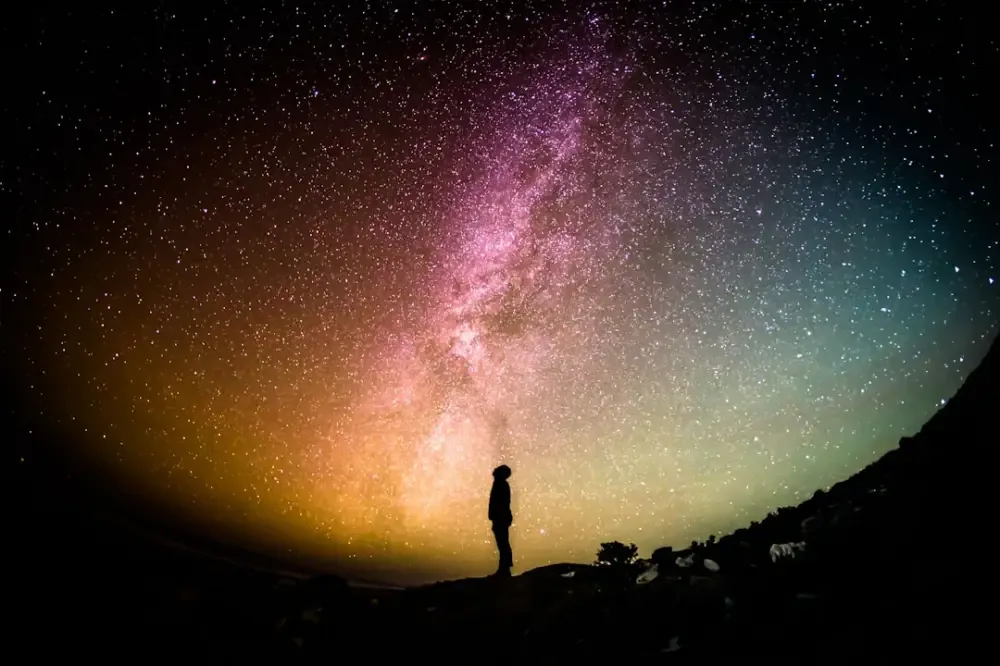
The Quiet Revolution of the Night Sky
For most of human history, the stars were a distant mystery, a canvas of light reserved for the navigation of sailors or the quiet calculations of those within the hallowed halls of academia. To study the heavens was to possess expensive equipment, to live near high-altitude observatories, or to have a seat in a prestigious university. There was a barrier—invisible but firm—between the average person and the profound truths of the cosmos. However, as we move further into the digital age, that barrier is dissolving. The democratization of astronomy through online learning is not just a technological shift; it is a profound expansion of the human experience.
Reflecting on this change, one realizes that the universe has always been there, waiting. What has changed is our ability to reach back. By making the stars accessible through digital platforms, we are finally opening the universe to everyone, regardless of their geography, background, or previous education. This accessibility is a quiet revolution, one that fosters a deeper sense of belonging in a vast and often intimidating void.
Breaking Down the Ivory Tower of Astronomy
In the past, the path to understanding planetary science or stellar evolution was linear and exclusive. It required a specific type of commitment that many simply could not afford. Today, the landscape of astronomy education has been transformed by online courses that offer the same depth of knowledge once held behind locked doors. This shift allows a stay-at-home parent in a rural town or a full-time professional in a bustling city to engage with the same data that professional astronomers use.
The Power of Digital Empathy in Learning
There is something deeply personal about learning about the stars from the comfort of one's own home. When we engage with a digital platform to study the rings of Saturn or the birth of a nebula, we aren't just memorizing facts; we are engaging in a form of cosmic introspection. Digital platforms provide a bridge between the cold, hard data of science and the warm, curious spark of human wonder. They allow us to learn at our own pace, to pause and reflect on the sheer scale of the Andromeda Galaxy, and to find our own meaning in the silence of space.
A Shared Human Experience Across the Stars
One might assume that learning through a screen would be a solitary endeavor, yet the opposite is often true. The accessibility of online astronomy courses has created a global community of observers. When the barriers to entry are lowered, the diversity of voices increases. We are no longer looking at the stars through a single lens, but through thousands of different perspectives. This collective journey helps us realize that while we may be separated by oceans and borders, we all live under the same sky.
As we navigate these digital classrooms, we find ourselves part of a larger narrative. The accessibility of the universe teaches us several vital lessons about our place in the cosmos:
- Unity in Scale: Understanding the vastness of the universe helps us realize how small our earthly disagreements truly are.
- Intellectual Stewardship: When everyone has the tools to learn, we all become stewards of scientific truth.
- The Beauty of Curiosity: Accessibility proves that curiosity is not a luxury, but a fundamental human right.
- Connection Over Distance: Digital platforms allow us to share the 'eureka' moments of discovery with people halfway across the globe.
The Emotional Resonance of Universal Access
Why does it matter that a student in a remote village can now take a high-level course on black holes? It matters because knowledge is the ultimate form of empowerment. When we make the stars accessible, we are telling every individual that their curiosity is valid and that their mind is capable of grasping the infinite. There is a profound emotional resonance in knowing that the universe is no longer 'off-limits.'
From Observation to Participation
We are moving from an era of passive observation to one of active participation. Through citizen science projects and interactive online modules, the 'average' person is now contributing to real-world astronomical discoveries. This transition from being a spectator to being a participant changes how we view ourselves. We are no longer just inhabitants of Earth; we are citizens of the solar system. This sense of agency is perhaps the greatest gift that accessible education provides.
The Future of Our Universal Journey
As we look toward the future, the trend of accessibility will only accelerate. Artificial intelligence, virtual reality, and increasingly sophisticated digital platforms will continue to bring the edges of the known universe into our living rooms. But beyond the technology, the core of this movement remains the human spirit. We are a species of explorers, and for the first time in history, the tools of exploration are in the hands of the many, not the few.
The stars have always been there, shining in the dark. But now, as we open the doors of education and invite everyone in, those stars feel a little bit closer. We are finally beginning to understand that the universe doesn't belong to the experts or the elite; it belongs to anyone with the courage to look up and ask 'why?' In this new era of accessibility, the universe is finally, truly, open to us all.